
-
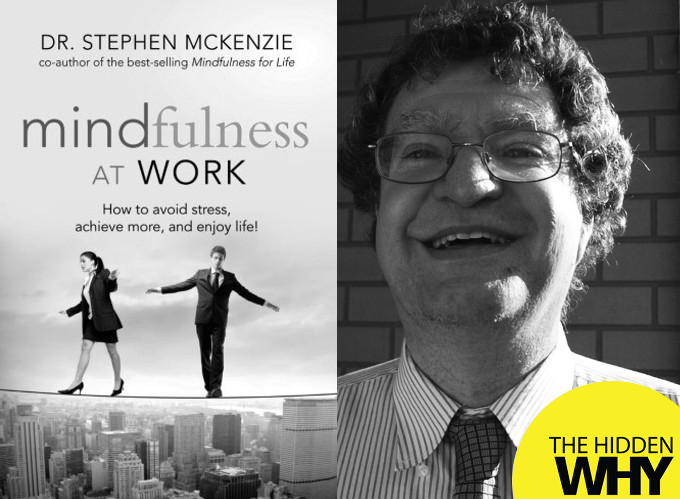
Mindfulness at Work by Dr Stephen McKenzie
Dr Stephen McKenzie is a professor of psychology and researcher of medicine and preventative health. Having published a few bestsellers including this one and another that he did in collaboration with Dr Craig Hassed called Mindfulness for Life he is somewhat attuned to the marvellous benefits that arise from developing one’s awareness through mindful practice.
He has dedicated 20 years to specialised research in the areas of anxiety, stress depression and substance abuse and believes that mindfulness, a tool available to everyone for free, is an excellent antidote for such conditions. This book focuses on how we can bring mindfulness to our working lives to counteract stress, improve workplace relationships, manage time and unexpected events and in doing so, hopefully, be a little happier.
Mindfulness at Work is not a complicated read. It delivers straightforward principles supported by clinical research, experience and comes with practical examples of how it can be applied. He even focuses on career-specific cases and advice that use the fields of law, teaching, sales and others.
I write on awareness all the time. As a passionate researcher in personal development, I have found awareness has application to almost all fields. It is not something some of us have, and some don’t, we all are aware, but our conditioned and distracted modern lives impede our ability to harness the powerful effects awareness has on our lives.
In this book, Dr McKenzie doesn’t share meditation or mindfulness practices to help you develop awareness but rather how you can bring awareness to many facets of our working lives. It is more about how the principles of mindfulness can be useful in our everyday working lives. Pretty remarkable considering most of us spend half our waking hours at work.
If the stats are anything to go by only a quarter of employees are engaged with their work, the rest as dissatisfied. Other figures indicate that up to 30% of the workforce at any one time suffer from some form or workplace related anxiety or stress. It leads to an array of other problems in both our professional and personal lives. Including decreased productivity, creativity, performance, focus, satisfaction, and a host of relationship dramas.
If we are not happy at work, it is likely to infect our home lives. People who are stressed or anxious are more prone to reverting to numbing activities, what I’d call mindlessness patterns of behaviours. Such as substance abuse, watching reality TV shows, overeating, and any other unhealthy activities that numb one’s emotions. It may even lead to violence or depression.
Understanding the more significant issues that arise from workplace stress, anxiety or disengagement makes you see why the work of Dr McKenzie and the insights in this book serves a higher purpose.
Some of the chapters that I found interesting to read where those on mindful leadership, relationships, decision-making, creativity and enjoyment. I wasn’t to “hooked” on the practical advice that was given for specific professions as I felt it became a bit monotonous. Nonetheless, there were still a bunch of useful learnings.
He has a great quote at the start of chapter one that I think sums up the book and its purpose well. It’s by Sogyal Rinpoche.
The practice of mindfulness, of bringing the scattered mind home, and so bringing the different aspects of our being into focus, is called “Peacefully Remaining,” or “Calmly Abiding” … in that setting we begin to understand ourselves more, and sometimes even have glimpses of the radiance of our fundamental nature.
It is not about all that goes on in our lives. It is not about how everyone or everything else is affecting our state of being. It is about us and our state of mind and how it reacts to the environment around us. Bring things back into the moment, without attachment or expectation, and may we see how being mindful can bring us greater peace – at the workplace and home.
If this book sounds of interest you can purchase Mindfulness at Work: How to Avoid Stress, Achieve More, and Enjoy Life!
here.
Please leave your thoughts, comments & questions below.
Peace, passion and purpose…
Other books that you may enjoy.
Further Reading and Resources
TED Talks: Ideas worth spreading
Elite Daily: The Voice of Generation Y
Four Hour Work Week: How to escape the 9-5, live anywhere and join the new rich.
The Minimalists: How to pursue a minimalist lifestyle and be happier.
Mind Hacks: Tips and Tricks for Using Your Brain
Rich Roll: Plantpowered Wellness Advocate
The Art of Charm: Build confidence, feel comfortable and networking differently.
The Art of Manliness: Encouraging men to be better husbands, fathers, brothers, citizens.
Tiny Buddha: Simple wisdom for complex lives.
Mind Body Green: Lifestyle media brand dedicated to inspiring you to live your best life.
Zen Habits: Find simplicity and mindfulness in life.
Creative NonFiction: “true stories well told.”
Barking Up the Wrong Tree: science-based answers and expert insight on how to be awesome at life.
The Positivity Blog: Practical articles on happiness, self-esteem, productivity and social skills.
FIND YOUR HIDDEN WHY with THE HIDDEN WHY (THW)
BUILD YOUR LIFE AROUND YOUR PASSION AND LIVE WITH PURPOSE
Sign up for free below and receive cool stuff from me each week + Plus a free copy of “The Four Pillars of Success”
In my weekly emails you will receive ideas, thoughts, learning’s and inspiration on:
- How to design a life that you want and live by your terms
- How to live a life with passion & purpose
- Methods, strategies, & techniques on life hacks
- Messages on how to better live your life
- We will also keep you up to date with fantastic interviews from THW podcast

 here.
here.


Leave a Reply